

Brain Rot and the Rise of Scroll Face in America

It was a controversial choice in 2024.
The Oxford Dictionary had chosen “Brain Rot” as the word of the year, which invoked pushback from parents and influencers alike. The prior saw it as an indictment on their parenting skills, while the latter saw it as an attack on their revenue streams.
The term isn’t a new concept. As a child, my parents used to say, “Why are you playing that Nintendo still? It is rotting your brain.”
And before video games, my parents’ parents said similar things of television. But this new threat feels entirely different and could be consequentially altering the minds and potential of us all.
What Is Brain Rot?
It generally describes the decline in cognitive abilities that stems from consuming addictive and unchallenging low quality content.
For example, the last time I was in the airport, I saw two young kids watching the same 10 second clip for several minutes straight. It was a super clicky video of a girl falling down with mousey voices talking fast. They watched it over and over and over again.
This is brain rot happening in real time. The feeling accompanying it isn’t painful. It is more a dulling and numbing sensation that leaves you feeling deflated.
The phrase originally stems from 1854, in Henry David Thoreau’s book, Walden, in which he criticizes society’s declining ability to deal with and enjoy complex ideas. He wrote, “While England endeavours to cure the potato rot, will not any endeavour to cure the brain-rot — which prevails so much more widely and fatally?”
But so what? Is this no different than old men complaining of young people losing their way, a trend that is quite old itself. Kenneth John Freeman, wrote in 1907, “The children now love luxury; they have bad manners, contempt for authority; they show disrespect for elders and love chatter in place of exercise.”
The difference is — science and research are pointing to measurably detrimental outcomes.
A study led by Dr. Ahmed Yousef, found that the excessive consumption of low quality content leads to declines in cognitive abilities (definitely in the short term, and potentially in the longer term too), along with increases in negative self-concepts, and emotional desensitization. He specifically attributed this as brain rot.
This type of content trains us to be dopamine oriented, and focused on getting the feeling content gives us rather than what the content actually teaches us. It functions much like a drug addiction. The first hit is the best, then, with each additional iteration, the content loses power, leaving us fiending for more, before eventually deflating.
The challenge is that “AI Slop “— the wave of low quality, generic, inaccurate media — is crashing across the digital sphere, and also accelerating this scourge of brain rot.
I’ve Borne Witness
As someone who makes their living writing in algorithmic environments, spending hours each week in feeds, I can’t tell you how many times I’ve seen junk, ChatGPT, AI generated images and memes, sweeping across platforms. They are often completely false narratives and information, but still feel good to see and read. And people just lap them up without a second thought.
What I would caution people against especially — is short form video. This type of content is particularly insidious and hard to get off of your feed. For the life of me, I can’t get YouTube to stop showing me YouTube Shorts, no matter how many times I click, “Show less of this.”
There’s a reason. YouTube learned through its research, and through the obvious observation of TikTok’s huge success, that short-form video is highly addictive and engaging. If you work at this company and have a goal or KPI milestone of higher engagement, short form video is the golden goose. But it comes at such a high cost.
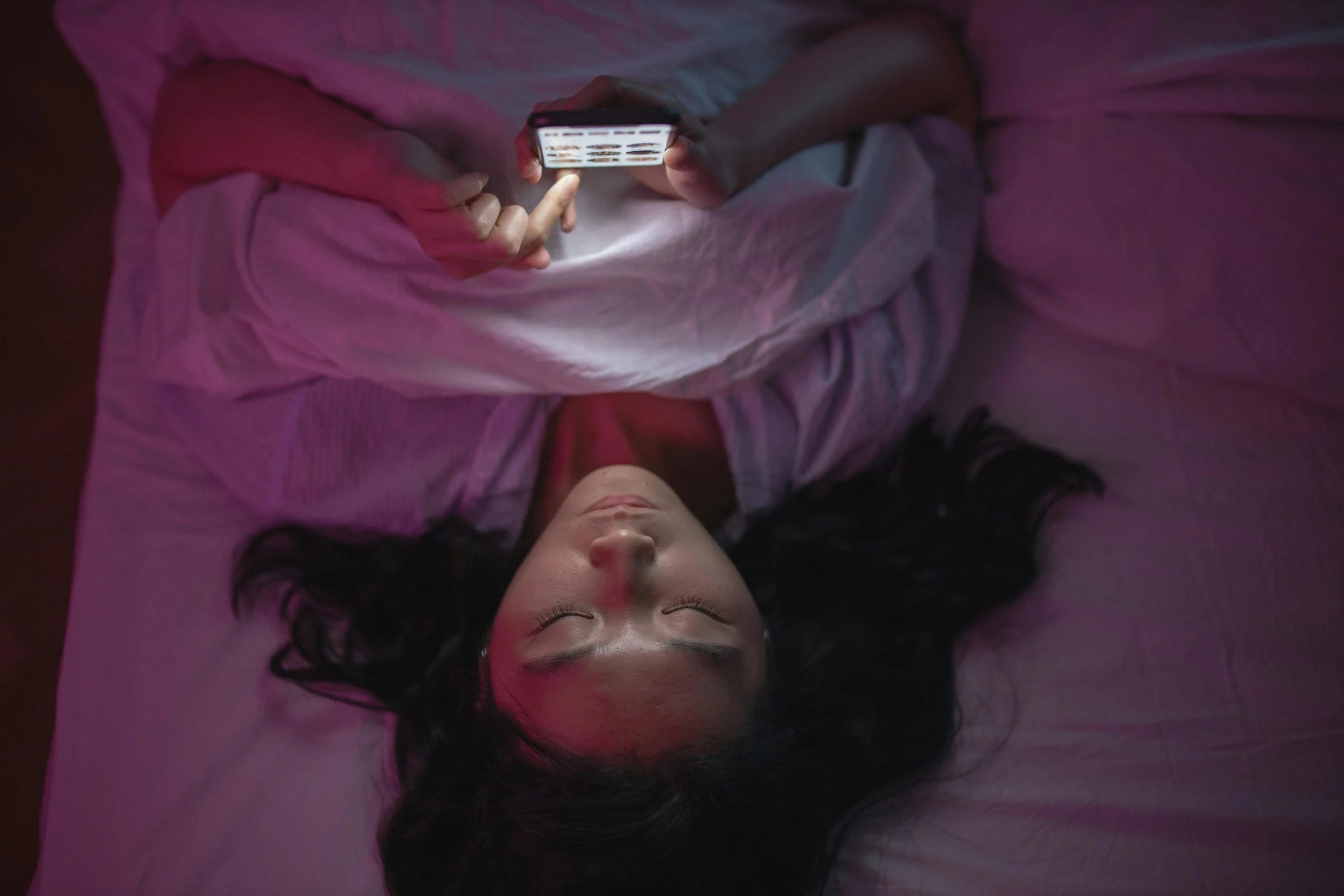
There’s this thing I call “Scroll Face” that I see in waiting rooms and lobbies around the country. Any lobby with more than two people will have at least one person with it.
It’s this half-dead, languid face, mouth ajar, as their screen flashes at their face, going through 6–10 second long videos.
It’s the information equivalent of candy corn. It tastes great after the first few, but then, after that, you are just numb to it, and any meal that comes after.
I’ll Prove It To You
Signs of gamesmanship are all over the content.
If you look at these videos, they usually have giant captions, that are blinking on the screen like you are a lab rat in some experiment about overstimulation. I’m going to show you something and I want you to put on your researcher hat.
This is the first video I saw on TikTok’s website, and is trending with many millions of views. Focus on the captions in the middle of the screen and don’t worry too much about their meaning. Just focus on how they are presented.
Notice that weird hypnotic effect happening? Notice how each giant word flashes as its own sentence, like the speaker is flipping a deck of glowing word cards in front of your face to wake you up.
Also, notice the videos behind the captions. They have nothing to do with the actual text you’re being shown. Most clips are 3-4 seconds long, and involve highly engaging accelerated videos of action sequences, scraping honeycombs, cleaning cat hair, shaving a shard of ice, cutting wood. This exact TikTok account has hundreds of videos like this and they reuse the same types of short clips over and over again. Why? Because they know it works and these clips create mini-dopamine hits.
The more I see these types of clips the more I wonder if we should even allow them in our society.
Users have even coined the term “TikTok Brain”, which is effectively the same thing as brain rot. It has the same effects, and parents are correct to be worried about this. It has resulted in shortened attention span with children in high schools.
The point I’m getting at isn’t that we should aim to be some high minded erudite, who read spend their days reading Robert Frost under a tree while pausing to ruminate on the nature of the universe. It’s that you simply have some awareness of brain rot. Know that it is happening and that it is because of the low quality content you consume.
Short form videos are little different than a slot machine, engineered to spike your dopamine and keep you sitting there.
Is There Any Workaround?
One strategy that has worked wonders for me is removing social media apps from my home screen on my phone. Not seeing them right away prevents me from impulsively clicking.
I still like having access to them as they help me stay in touch with friends and family that live far away. However, the decision to use them feels for more intentional now.
Another option is to do a digital detox. Test yourself to go a full day, week, or month, without using social media or apps that turn you into a dopamine fiend. Unless of course, you are stopping back in to read on Substack (winky winky).
The big insight came for me when I began benchmarking my mood b efore a long session in front of a screen and after. I realized there is rarely a time when I come away from that screen feeling better than when I started. This is especially so if that screen time involves short-form media.
I don’t know that brain rot is making people dumber. But it is certainly worsening our performance by spades, and making our mental health outcomes worse.
My biggest takeaway advice for you from this article—is to avoid short-form video entirely. And don’t ever download TikTok, or any program akin to it.
Stick to consuming thought provoking and longer form content that isn’t changing camera angles every two seconds, blinging, flashing, and making you feel like you’re at The Hard Rock.
“Short form videos are little different than a slot machine, engineered to spike your dopamine and keep you sitting there.”
“Little different”? Have you been to a casino in the last ten years?
They are essentially the same! The only thing missing from my YouTube Shorts feed is the handle and the occasional payout. Plus I can see lots of very different videos without stepping to the next slot machine.
So, okay, I guess there’s a difference. But so similar that the exceptions prove the rule.
No TikTok or FB or IG on my phone. I do love YouTube for longer content, but am also delighted with Nebula which seems (so far) to have no shorts at all, and several of my favorite Youtubers post extra stuff on Nebula in addition to their usual YT videos.
Anyway, great article, and excellent practical advice that has already helped me continue functioning in a world full of visually addicting temptations.
Agreed, I remember seeing people looking like zombies in front of slot machines in the 90s, and I'm seeing the same with zombies staring at smartphones now. Scary. I never had time for social media in the past and don't care for it. Lots of food for thought in this essay and a warning. I've seen "Idiocracy" and suspect smartphones can make people dumber.